A 17,400m² CONCRETE WASTE-PROCESSING PLATFORM
Approximately 4.3 acres of hardstanding, or roughly three to four football pitches
This newly constructed concrete platform would replace naturally draining agricultural ground high on the ridge above the Roseworthy Valley.
This is not simply a large slab of concrete.
It is a vast, heavy and permanent impermeable surface, fundamentally changing how rainfall behaves across the site.
Water that once fell onto open ground must instead be captured, channelled, stored and controlled — on an exposed ridge above farmland, homes and the valley below.
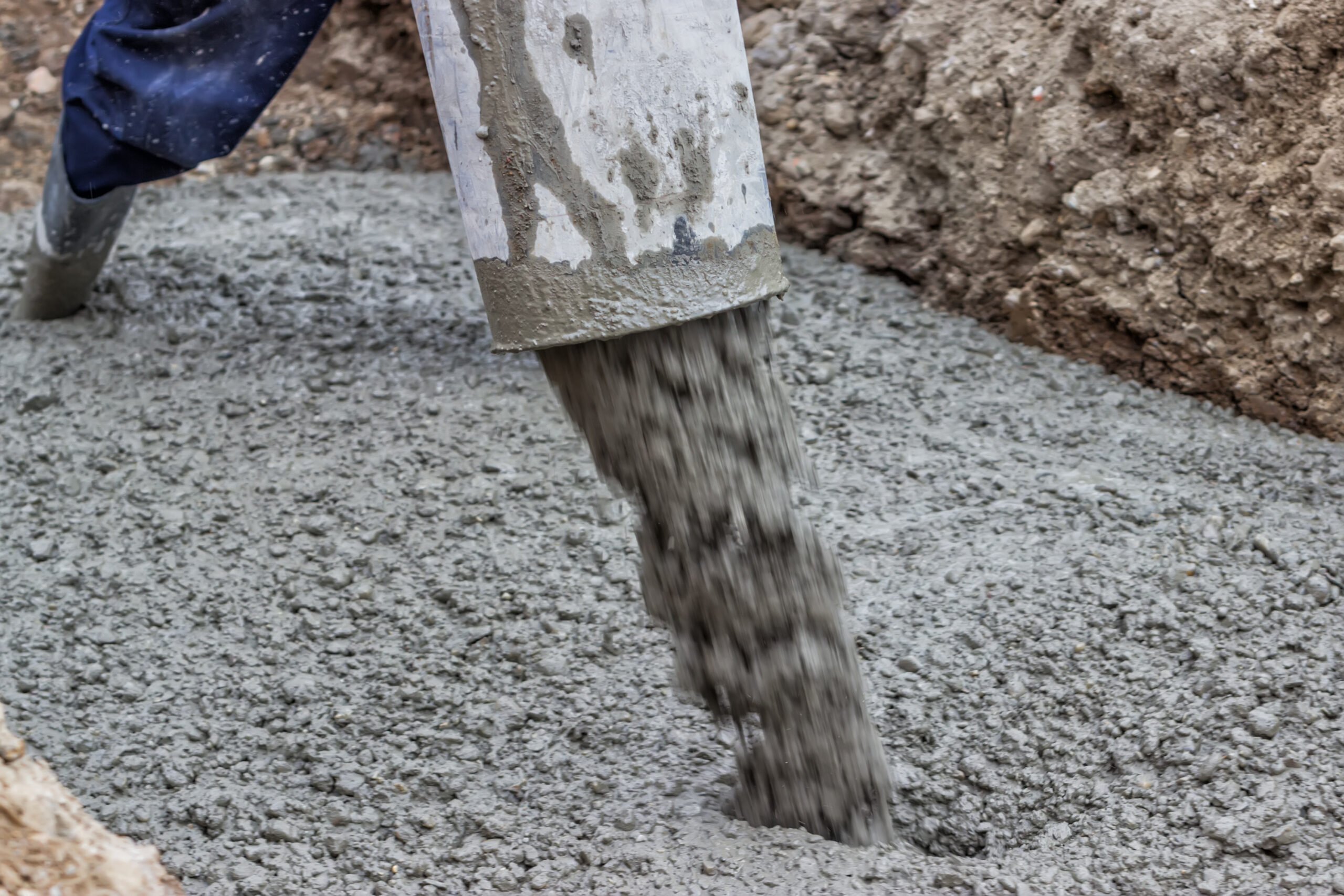
Concrete pouring (Illustrative)
Once poured, those four acres of concrete permanently change the physical and hydrological character of this hillside.
BUT THE ENVIRONMENTAL COST BEGINS LONG BEFORE THE FIRST SLAB IS POURED.
Concrete is not a “green” or inherently sustainable material.
Taking all stages of production into account, concrete is estimated to be responsible for around 4–8% of global CO₂ emissions.
ITS PRODUCTION CONSUMES VAST QUANTITIES OF RAW MATERIALS, ENERGY AND WATER, WHILE THE EXTRACTION, MANUFACTURE AND TRANSPORT OF THOSE MATERIALS CARRY ENVIRONMENTAL COSTS OF THEIR OWN.
That matters anywhere.
It matters even more on a sloping hillside above a valley where water already moves downhill through fields, springs, ditches and connected watercourses.
The result is permanent soil sealing on a vast scale.
Land that once absorbed rain becomes land that sheds it.
Living ground becomes permanent industrial hardstanding.
AND ALL OF THIS IS BEING DONE TO PERMANENTLY INDUSTRIALISE AN EXPOSED AGRICULTURAL HILLSIDE ABOVE THE ROSEWORTHY VALLEY
The applicant already operates an established waste facility on a brownfield site. The planning application states that expansion of that existing site and other locations were considered but discounted for “logistical reasons” and the “sustainability of operations”.
However, no meaningful comparative assessment was published to explain or justify that conclusion.
INSTEAD, THIS APPROVAL WOULD PERMANENTLY TRANSFORM PRODUCTIVE AGRICULTURAL LAND INTO A MAJOR INDUSTRIAL WASTE-PROCESSING COMPLEX.